Chapter 01 · The evolution

A classic shell, thoughtfully evolved for freedom.

Cozy’s story began with her original owners in 2001, then grew across two family chapters—one practical improvement at a time—from early travel and careful stewardship to a powerful, connected off-grid system.

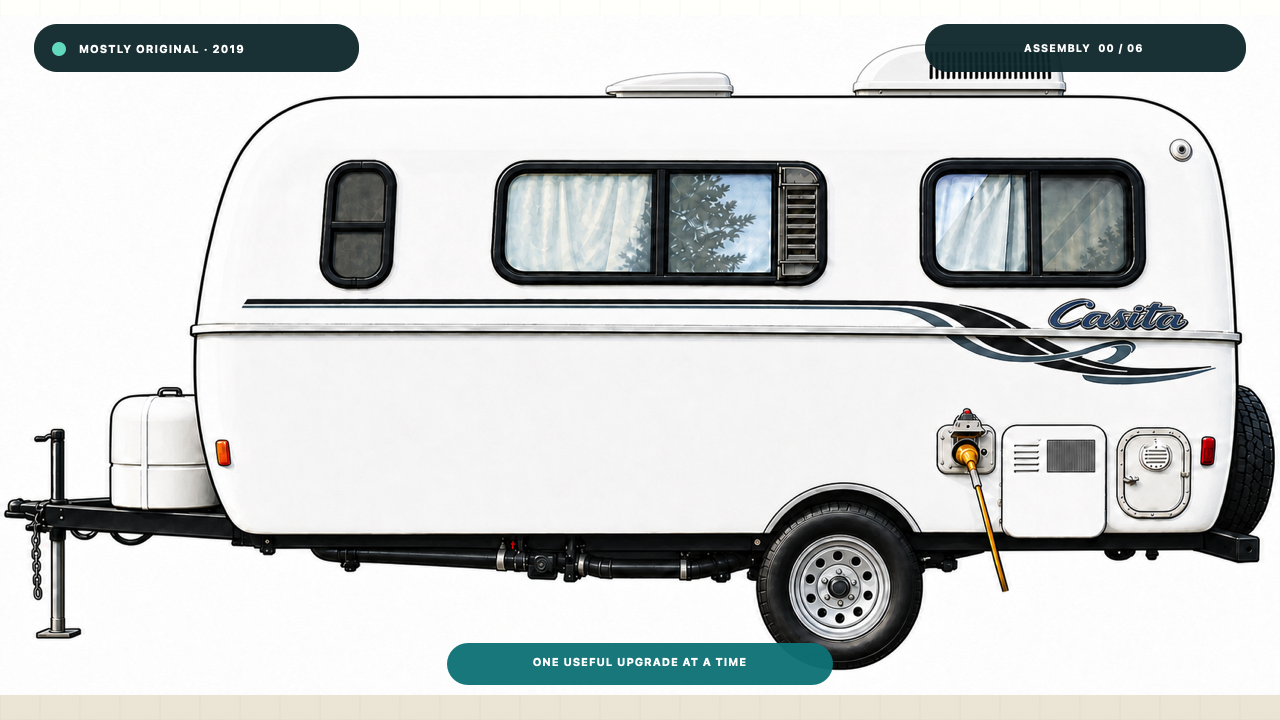
Cozy shown as a carefully evolved 2002 Casita with its major exterior upgrades
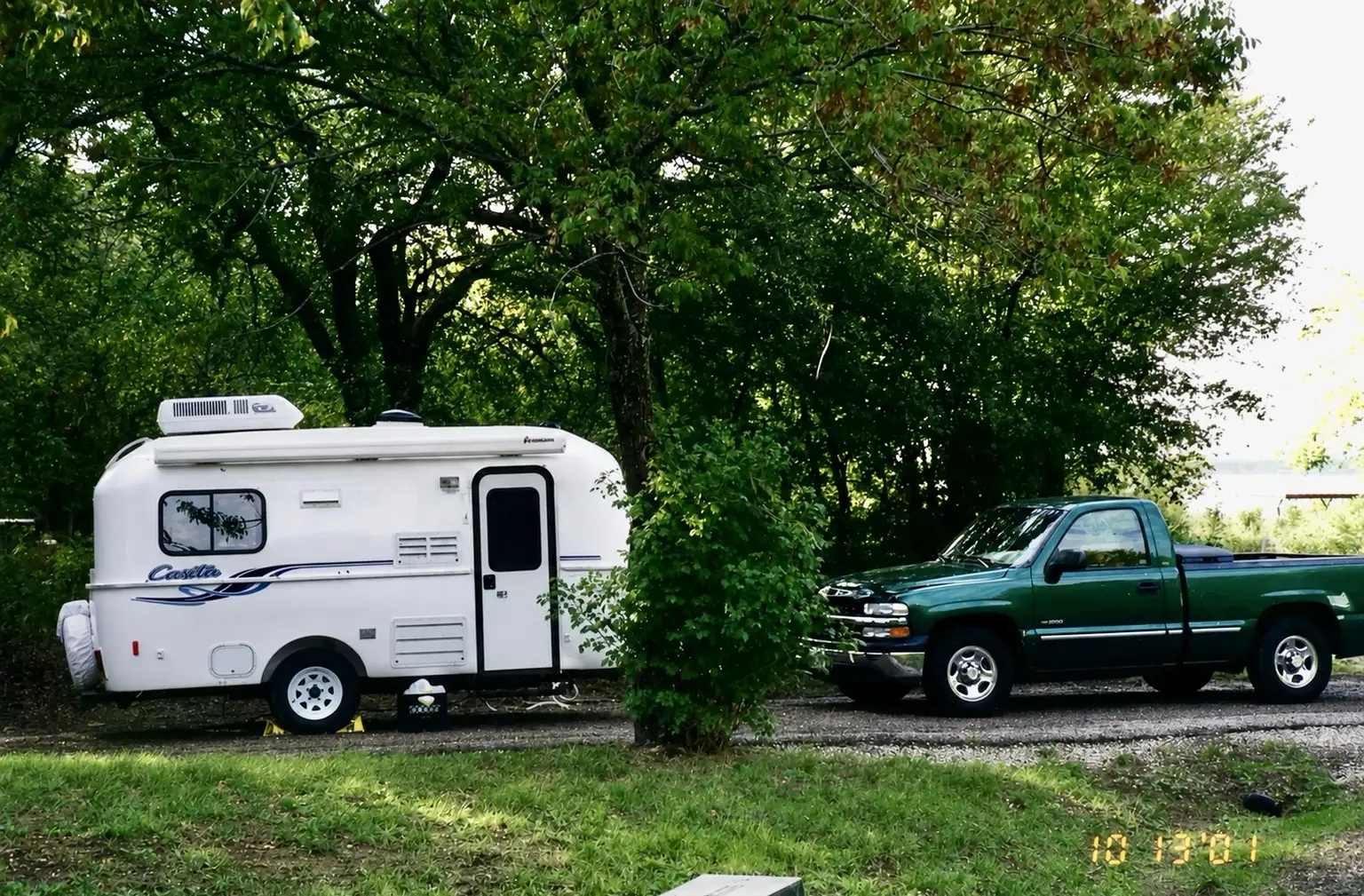
Cozy hitched to the original owners’ green pickup beneath mature trees on October 13, 2001
October 13, 2001The earliest dated travel-era photograph in Cozy’s archive. Restored from the original print; location unknown.

The story before our story

Cozy’s first chapter was already underway.

Only nine days after the Texas registration record, Cozy was photographed hitched to the green pickup that carried her through the beginning of the original owners’ chapter.

The date is certain because it is printed directly on the photograph. The location and trip are not. It may preserve one of Cozy’s first journeys, but the archive will keep that possibility open until the original owner’s wife can help identify the place and occasion.

What the picture does prove is more meaningful than a route line: Cozy entered the world as a camper meant to be used, cared for and improved. Eighteen years later, that first chapter would become the starting point for ours.

The archive comes into focus

Two recordkeepers. One little Casita.

Alan documented how Cozy worked. Olivette documented where Cozy took them—and what she saw when they arrived.

Olivette’s public Come Along Blog explains that they bought a small trailer in 2001 with a simple division of labor: she would paint and Alan would read. The Casita became a traveling studio and familiar basecamp for years of painting excursions.

Systems & stewardship

Alan kept the technical record.

Receipts, manuals, measurements and service notes trace a methodical owner who studied Cozy’s systems and made practical improvements—from a replacement converter and early warm-white LEDs to weather gear, plumbing details and custom hardware.

ElectronicsModificationsDocumentation
Art & journey

Olivette kept the visual record.

Her dated posts pair plein-air paintings, photographs and written observations with the places they visited. The earlier layer survives in Camper’s Daily Log books that record destinations, campgrounds and individual sites from 2001 through 2009.

PaintingTravel journalsPlace

Three layers of one life

The history was never missing. It was stored in different forms.

2001–2009
Camper’s Daily Log books

Handwritten destinations, places stayed and campsite details. Olivette is locating the notebooks; this layer has not yet been digitized.

2009–2018
The first-owner blog window

Dated painting excursions, locations, photographs and finished artwork from Cozy’s original family chapter.

2019–today
The current family record

Trip photography, route and mileage reconstruction, system documentation, weather data and the continuing build.

ThenElectronics · painting · handwritten logs
NowElectronics · weather · photography · digital logs

The same instinct, new tools.The tools changed. The instinct didn’t: understand the camper, record the journey and make something from the places it opens up.

September 21, 2019

Cozy had already been loved.

“After years of adventures with her original owners, Cozy was lovingly passed along to a new family ready to continue the journey.”

The right camper was not simply a set of specifications. Cozy’s size and layout fit the family, the condition and value were exceptional, and Casita’s reputation made the fiberglass shell feel like a lasting foundation. Just as important was the connection with the couple who had cared for her from the beginning.

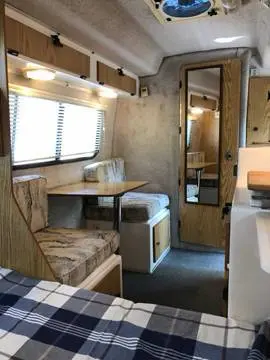
Cozy was mostly original, very well maintained and in excellent condition. The interior felt dated, but that was an invitation—not a problem. Her original owner was excited to see a family with children take over, add new memories and extend a journey that had already crossed so much of the country.

Cozy's original interior with gray carpet, neutral floral cushions and oak cabinetry
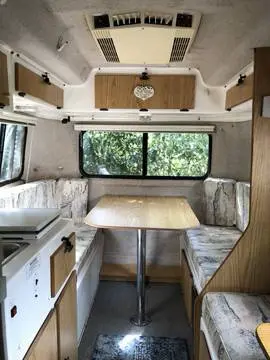
Cozy's original rear dinette with neutral upholstery and carpet

The first transformation

From well cared for to unmistakably ours.

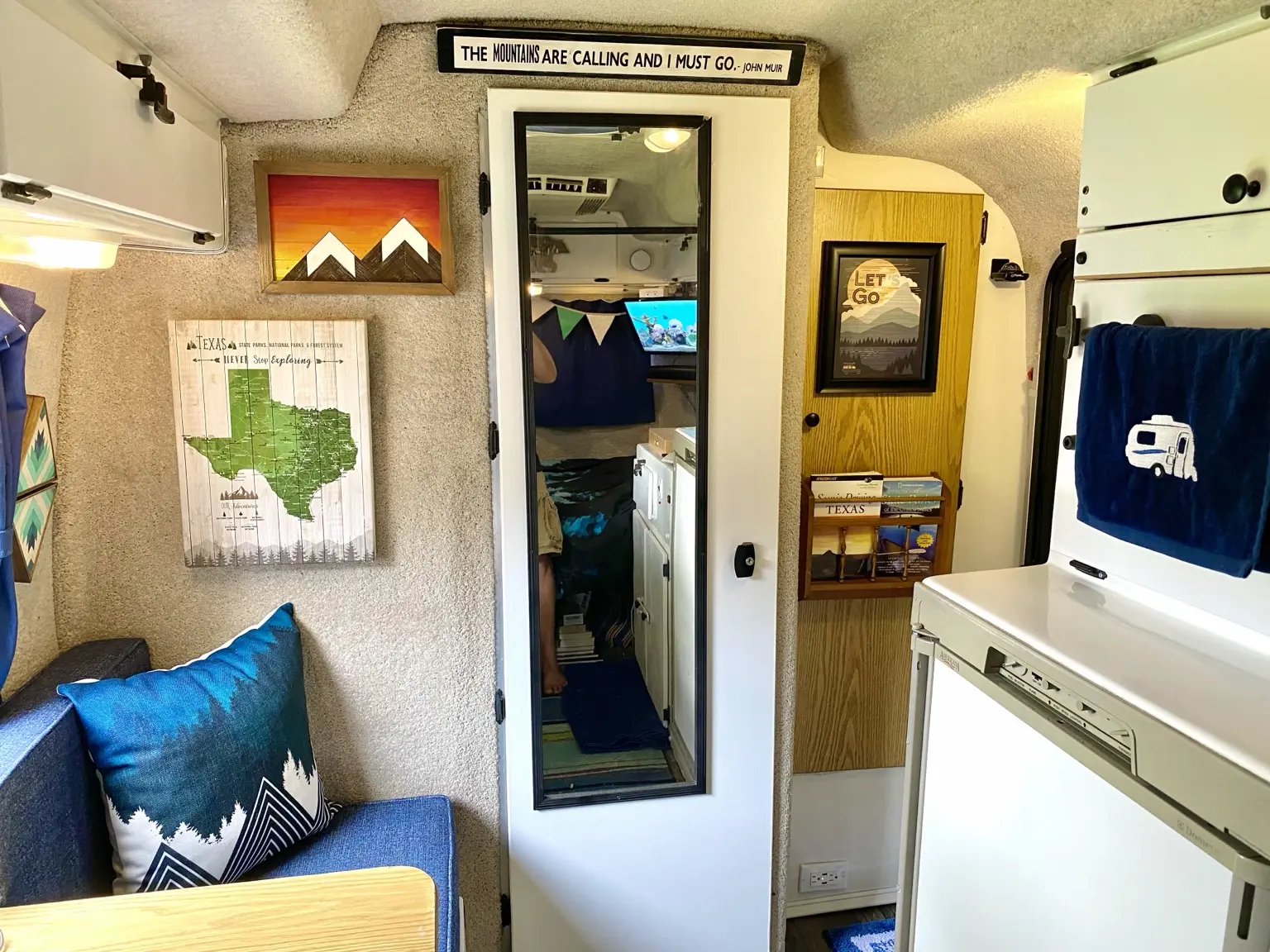
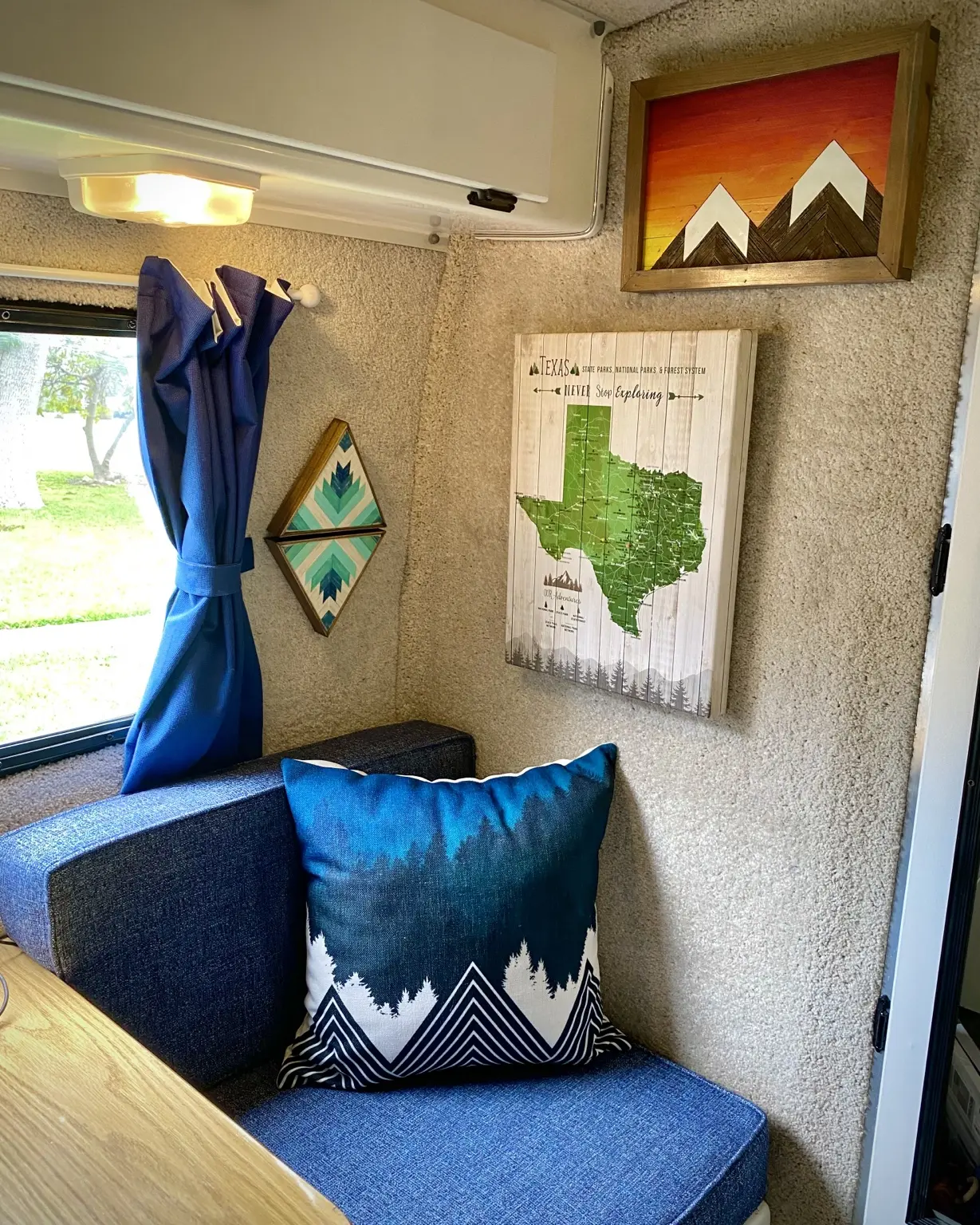
The floor came first and the television followed early. The rest developed gradually—many pieces found on Etsy—until blue mountains, forests and practical family comforts formed a single visual language.

The original rear dinette before the interior updates
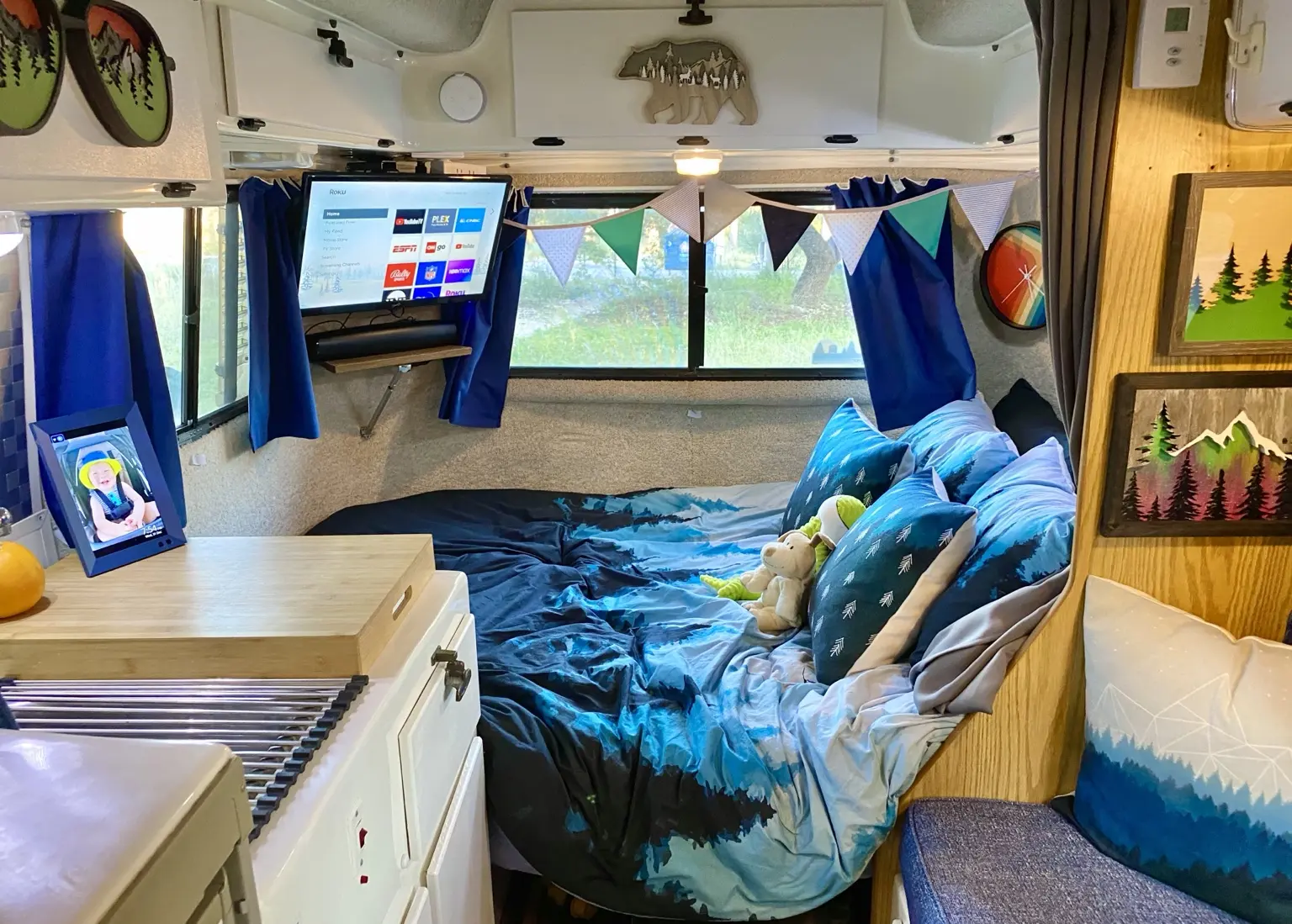
The same rear area converted into Cozy's current blue mountain-themed bed
▱

Laminate flooring

The first big change replaced dated carpet with a cleaner, more modern surface that is much easier to live with when camping with children.

▶

Television & rainy-day comfort

A television followed early, giving the boys movies and entertainment after dark or when weather kept the family inside.

✦

Custom cushions & textiles

New cushion covers, mountain bedding and deep blue fabrics turned the original neutral interior into a coordinated, comfortable retreat.

◐

Blackout curtains

Blue blackout curtains add privacy, soften the windows and help everyone sleep when summer mornings arrive early.

♣

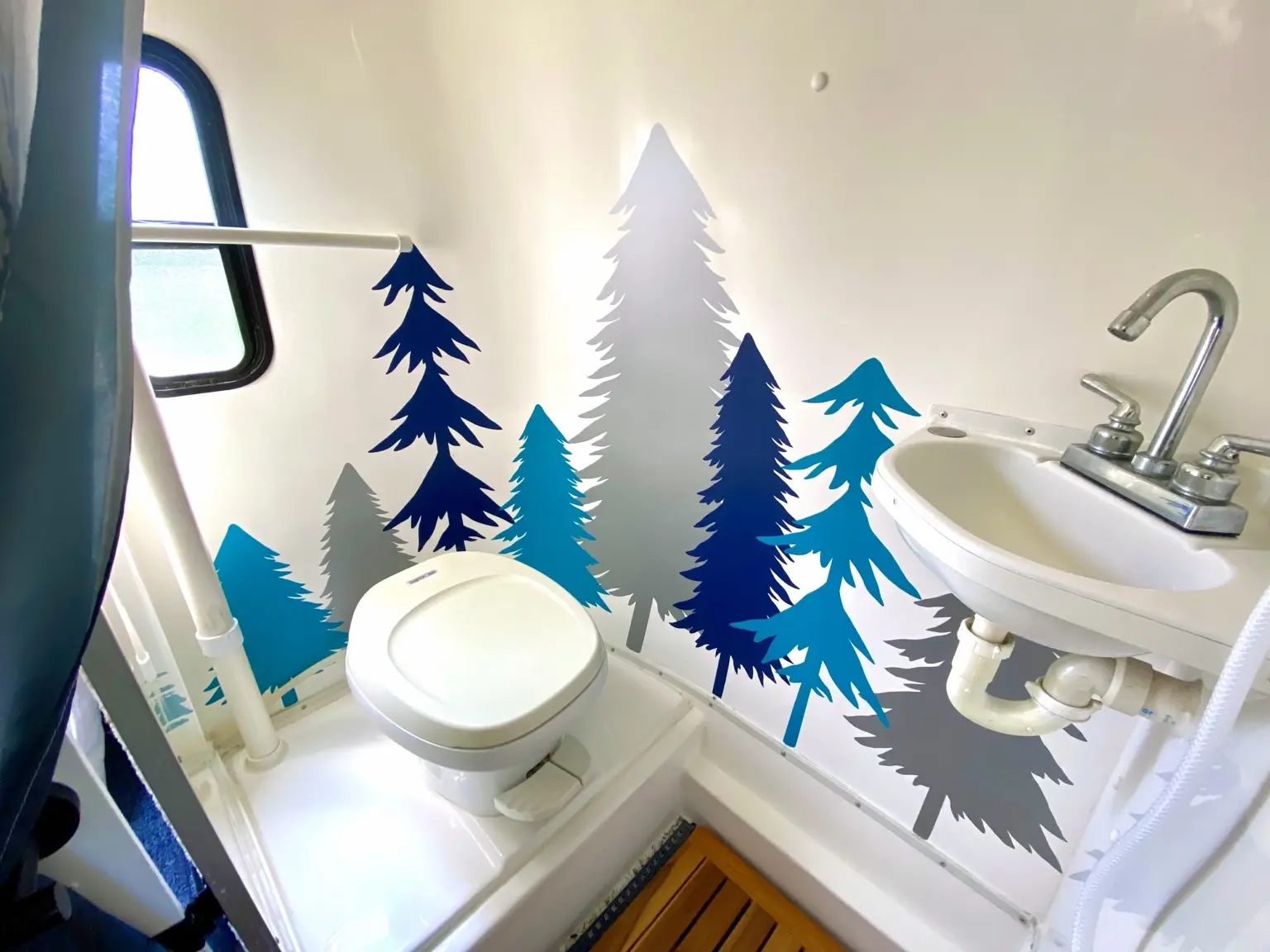
A forest in the wet bath

Layered evergreen decals, faux succulents and dark fixtures gave the little bathroom a memorable facelift without changing its useful footprint.

⌖

A map that keeps growing

A Texas canvas map records the parks Cozy has visited. A new pin turns every campsite into part of the camper’s visible family history.

♨

Tankless hot water

A tankless water heater replaced the wait-and-reheat rhythm of a small storage tank with hot water produced when the family needs it.

↑

Powered tongue jack

The electric tongue jack at the front makes hitching, unhitching and front-to-back leveling faster and less strenuous.

✣

Four corner stabilizers

Four scissor-style stabilizer jacks reduce movement after setup. They steady Cozy at camp; they are not used to lift the trailer.

The interior today

Small spaces can still tell a big story.

The family theme is visible in every direction: the blue cushions and curtains, the mountain bedding, collected artwork, the Texas park map and a bathroom that feels like a tiny walk through the trees.

The complete evolution · home, power and intelligence
01
September 2019

Start with a well-loved Casita

Cozy arrived in excellent condition: mostly original, carefully maintained and already proven by years of travel. The compact Spirit Deluxe layout was the right foundation for a family camper.

02
First changes

Make the interior feel like home

Laminate flooring replaced the carpet, a television came early, and blue textiles, blackout curtains, mountain art and useful little details gradually formed one coordinated family space.

03
Practical upgrades

Make setup easier

A powered tongue jack simplified hitching, and four scissor-style stabilizer jacks made camp feel steadier.

04
Interior

Give the bathroom a point of view

Forest decals, dark hardware, a mirror, small shelves and faux plants turned the compact wet bath into a playful extension of Cozy’s mountain-and-forest theme.

05
Installed

Build a real energy reserve

Four Renogy lithium batteries moved the energy center under the bed. Two batteries form each 25.6-volt pair, and the two pairs work together as one 600-amp-hour bank with 15.36 kilowatt-hours of storage.

06
Installed

Charge during every kind of day

Roof solar, campground shore power and the Explorer’s alternator were coordinated around one battery reserve instead of behaving like unrelated systems.

07
Installed

Match cooling to the power source

A Country Mod 24V A/C handles efficient off-grid cooling. The Coleman-Mach 10 NDQ provides high-output 13,500 BTU cooling when shore power is the better tool.

08
Integrated

Make the system understandable

Victron system data and camper sensors come together through Home Assistant. Sparky, Tilty and the other named dashboards present that information clearly on Fire tablets.

09
The goal

Let the technology disappear

The final measure is not the equipment list. It is a trip with fewer checks, fewer surprises, useful comfort and more attention left for the campsite.

What exists now

A small camper with unusually deep capability.

Every headline number is tied to an installed system or a measured result, not a brochure-only promise.

2002

Casita Spirit Deluxe model year

17′

classic molded-fiberglass shell

15.36kWh

installed lithium storage

3

coordinated charging sources

Architecture

Choose 24 volts on purpose

At the same power, doubling voltage roughly halves the current moving through the battery cables. That makes high-power equipment easier to support efficiently.

Continuity

Keep the original camper

A dedicated 24V-to-12V converter lets Cozy’s familiar lights, pump and fans continue to work while the high-power architecture advances around them.

Usability

Show the whole truth

Power, climate, tanks, tires, weather and location belong in one understandable interface instead of across disconnected gauges.

The next chapter

The build is still evolving.

Cozy’s power and connected systems are established. The current design work is focused on extending the same clarity to cold-weather comfort, summer heat control and outdoor cooking.

Exploring

Efficient propane heat

The now-open original battery compartment and the area under the sink are being evaluated for a compact heater installation. The final location and model are not yet locked.

Planning

Permanent exterior propane connection

A protected line under the fiberglass shell would place a quick connection beside the outdoor kitchen while preserving normal dual-tank operation at the front of the camper.

Planning

Ceramic window tint

A quality ceramic film would reject infrared heat and damaging ultraviolet light without relying on an overly dark appearance. The goal is a cooler interior, less strain on the air conditioners and better protection for Cozy’s curtains, cushions and finishes.